Define use and climate
Name activity, body zone, layer, movement, contact, heat, moisture, wind, precipitation and care. An outdoor category is too broad to select a construction.
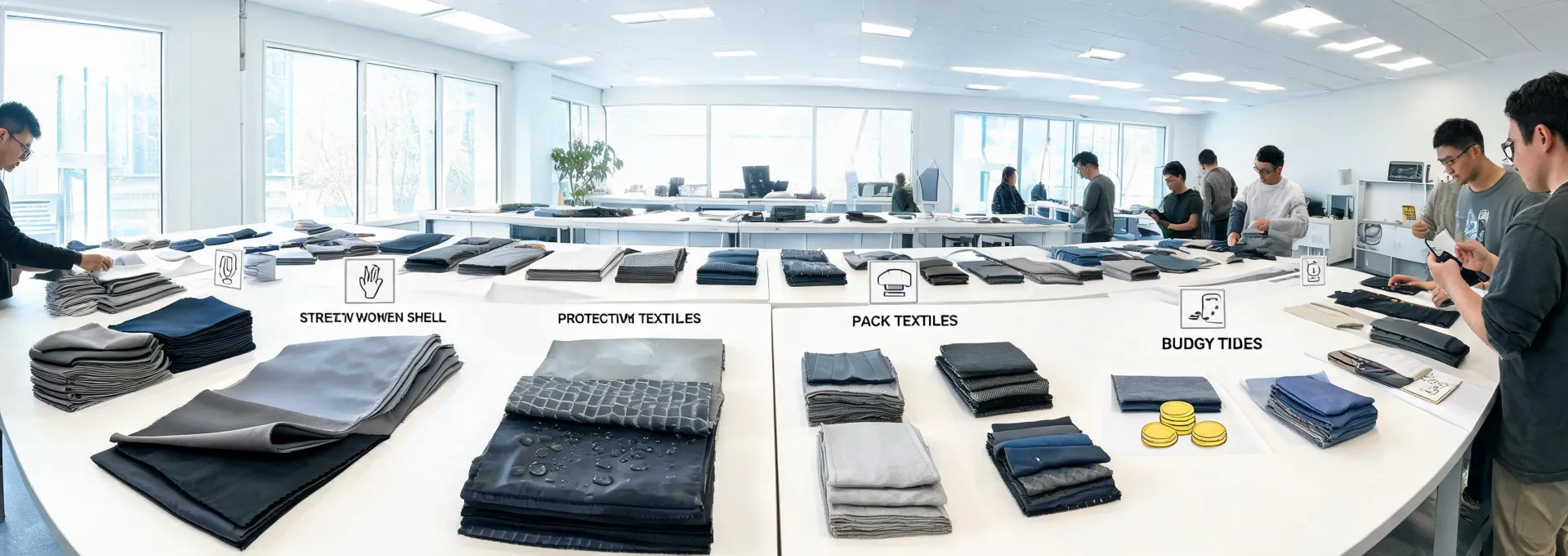
Guided material filter
Screen by activity, layer, handfeel, weight, construction, performance evidence and budget before a color direction becomes the entire specification.
The selection commitment is practical: every candidate is described through the same application, material, evidence and commercial fields. Tactile judgment remains important, but a pleasant hand does not replace construction data or a garment trial.
When a requirement is unknown, it stays marked open for testing or buyer disposition. This prevents a memo sample, laboratory specimen and production lot from being treated as interchangeable approvals.
Name activity, body zone, layer, movement, contact, heat, moisture, wind, precipitation and care. An outdoor category is too broad to select a construction.
Record fiber, yarn, weave or knit, GSM, usable width, stretch direction, coating or lamination, finish and color route.
Choose hydrostatic, moisture-transfer, air-permeability, abrasion, tensile, tear, colorfastness or flame methods by the actual failure mode.
Decision readiness
The bars show information completeness, not manufacturing progress or product performance. A gate closes only when the relevant question has a recorded answer.
Evidence checkpoint
Availability and applicability must be confirmed for the selected article, supplier entity, factory where relevant and order date.
Fiber, nominal GSM, usable width, construction, finish and color reference.
Method, environment, specimen, raw result, endpoint, date and covered article.
Issuer, named entity, standard or regulation, product coverage and validity.
Lab dip, strike-off, handloom, garment trial and production-lot decisions kept separate.
Membrane lamination can support a defined weather layer while increasing stiffness, complexity and repair pressure; direct coating can offer processing flexibility while long-term flex and water response depend on formulation and coating weight. Solution-dyed routes can support weathering consistency while constraining color development and MOQ; piece-dyed routes offer flexibility with tighter dye-lot control.
Send activity, layer, handfeel, weight, width, stretch, weather, care, quantity, budget basis and target date.